The Ultimate Minority

Whenever you find that you are on the side of the majority, it is time to reform – Mark Twain

This is a topic I’ve often thought about: Why is it that when businesses or individuals do something corrupt or devious, the media and the people get outraged and insist on more government control – then, when the government takes control and government itself screws everything up, or worse, takes the corruption and law breaking to the next level, people laugh about it? What’s so funny?

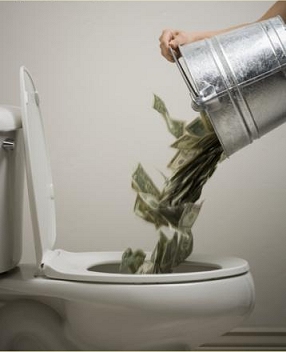
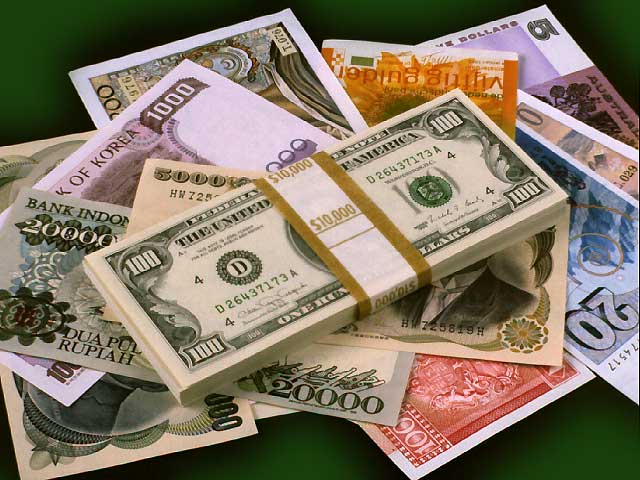
Let’s start with a simple example of government bumbling and ineptitude. Remember a few years back when the US government “lost” billions of dollars it packaged up and sent to Iraq in the form of $100 bills on pallets? Try telling that story to a patron on a bar stool at your local pub, and I can predict the reaction of your listener: A shake of the head and laughter. Boy, that government sure is incompetent, isn’t it! Never mind that we should be outraged that $12 billion of our tax dollars are being packaged up on pallets, 360 tons of it, and shipped into a war zone to buy support from Iraqi interests. Never mind the fact that $8 billion of it could not be accounted for. Boy, that government sure is bumbling! Ha ha.

Now for a slightly more serious example: Remember when private airline security “failed” to protect us from terrorist attacks? Immediately, the cry went out for the government to take control of airline security. Overnight, an entire industry was removed from private holding and moved to government management. Never mind the fact that now we all pay for airline security whether we fly or not, and never mind the fact that everything the government does costs ten times more, we’ll all be safe now, right? Now, with complete government control over airline security, we’re all treated as subjects to government scrutiny, not paying airline customers. We can’t bring our toothpaste on a plane unless it’s in a government-approved package, we face longer lines, deeper intrusions into our property, and we’re not one bit safer. Reports abound of abuses at security checkpoints, and the constant ongoing failures to stop “dangerous” items from getting past security. Leno and Letterman are making jokes about it – are you laughing? And even if you’re not laughing, where’s the outrage that we had for the private sector failure? It’s as if once something has been pushed up to government responsibility, we expect failure and rest on our belief that it can’t be done in the private sector, and that government will sort out the problems, ill-founded as this faith may be.

But these examples pale in comparison to the hilarious examples of government’s abuse of the law and its attacks on liberty.

Before I go into the details, there is a second and larger issue tied in with all of this: We’re all constantly reminded of the declining morals of society. We blame Hollywood, lack of religious teachings in the schools, an obsession with instant gratification, hedonism…the list goes on and on.

I have been working on the idea lately that government itself is responsible for decline of morality in a civilization. A few examples in my studies kicked the idea into high gear, when I read about how the Jews were dehumanized with humor in Nazi propaganda short films. The people laughed. Eventually, doctors were participating in unthinkable crimes using human babies as rats in research experiments. When the whole system broke down, we look back at the behavior of the doctors and ask “how could they have done such things?” as if there were an event, a single traceable occurrence that led a doctor to one day switch from a caregiver to a monster. It doesn’t happen overnight, it happens through a long series of gradual conditioning steps. Governments, in their ongoing efforts to kill people, consistently dehumanize their victims to make it easier for the people to accept the killing – even to the point of using humor.

And then today I read Joshua Katz’s excellent piece at LewRockwell.com where he argues that in the United States today, we laugh at such things as torture, police abuse, and military occupation.

These are things we should hold as completely antithetical to the idea that is the United States of America, but we’re joking and laughing. It’s not just a matter of bad humor, it’s that we are desensitizing to atrocities committed by the government we formed to prevent them. Here is a passage from Katz:

Let’s be clear what these events all signify. Guantanamo Bay is a place where people are held, without charges, for 7 years now. In order to avoid judicial oversight, the executive has flown these people outside the boundaries of the United States; there is no law in place to protect them. The people held there, who have not been convicted, or even charged with a crime, are routinely tortured. At the University of Florida, a student asked a Senator a question about what he suspected was a stolen election. In response, he was electrocuted, beaten, and arrested. These are not jokes, these are deadly serious actions which establish, beyond all doubt, that a tyrannical order is being built. Our culture has turned them into jokes.

I’m not laughing. I’m concerned about the growth of government power and its abuses, and I’m acutely aware that a nation of peaceful people does not become a society of tyrant supporters overnight. It starts with ineptitude, and we laugh. It progresses to lawbreaking and we throw our hands up in helplessness, then use humor to deal with it. A society breaks down when it arrives at perpetual war, torture, and general inhumanity – and laughs.  Governments are destructive to morality.

Global Farce

No comments

Three years ago, sitting on a beach in beautiful Northern Michigan with friends and family, I made a prediction: All of this talk of “global warming” would be dropped within a decade.

Everyone was taken aback by my statement, ironically by which, I was taken aback. It was as if I was the first person they’d heard that didn’t accept global warming as reality. After all, “the debate is over”, isn’t it? Everyone knows the planet is heating up and unless we stop what we’re doing, we’re in big trouble, don’t they?

Did I make this statement because I’m an expert in global climatology? No. I made this statement from an understanding of several key principles, from which one may observe a phenomena and make sound predictions.

The nature of mass movements

Charles Mackay said that men go mad in herds, while they only recover their senses slowly, and one by one. I have always been weary of jumping on the majority bandwagon, because I have adopted as a principle the idea that mass movements are usually based on lies and deceit. They are an assault on individual sovereignty, another of my closely held principles.

Fear as a motivator

Mass movements always have something to be afraid of, because nothing motivates people like fear. It is the most basal of all our instincts, prompting our fight-or-flee mechanisms to incite us to action. Whenever you see a mass movement appealing to your fear, ask questions.

There’s always another doomsday

Throughout the history of mankind, there have always been prophecies of doom and destruction. A casual study of doomsday theories will reveal that many predictions have been made, and many have had their time come and go – while the world keeps turning and people keep going about their business. So when I heard the global warming hysteria, my question is “what makes this doomsday more legitimate than all the others?”

An understanding of the theory of variation

My years of study in statistics have taught me that all things vary, and that people are prone to see trends where there are none. Worse yet, those with a cause will often exploit ignorance of variation by manipulating the data to tell the story they want to tell. When presented with a “trend” calling me to alert, my first question is always to understand the frame, the data in its proper context. The manipulators often take a few points in a series, assume a trend, apply algorithms, and paint a picture that tells the story they want to tell. When I first saw the famous “hockey stick” graph, my antennae twitched.

Junk Science

In my odyssey stage of life, I took a keen interest in science as a means to understand the world we live in. I became intrigued with the scientific method and how it contributed to the growth of knowledge. With a solid understanding of scientific method, one can quickly spot junk science, which is not science at all but lies told under the guise of being “science.” When I heard the statement “the debate is over” I knew I was in the realm of junk science – “the debate is over” is antithetical to science. By the very definition of the scientific method, the debate is never over, and anyone who claims otherwise is practicing dogmatism, not science. It took me five minutes of research on the Internet to learn that dissenting scientists were out there, and that they were being muzzled, bullied, and scorned by the global warming adherents. Big red flag.

Government’s role and follow the money

Anytime government is involved, be suspicious. Vast sums of taxpayer money are funneled to global warming research. Follow the money to find out who benefits, and understand their motivation. When academics employ junk science to promote a message the government wants broadcast to the masses in exchange for huge government grants and favors, while dissenting researchers are shut out by the establishment and get their government funding pulled…

Your meter should be pinned.

I was wrong in my prediction. It will take less than a decade for global warming to disappear from the debate. I should have predicted a shorter timeline based on the power of the Internet to inform and expose propaganda and junk science. Be aware, however, that global warming will not be debunked in the mainstream media. It will fade into the background as the next Big Scare takes the stage, and the masses will be fretting over another doomsday.

If the reader gets one thing from this web log, I wish it would be this: Beware of mass movements.

Nothing is more revolting than the majority; for it consists of few vigorous predecessors, of knaves who accommodate themselves, of weak people who assimilate themselves, and the mass that toddles after them without knowing in the least what it wants. – Goethe

Farmland Facism

No comments

Today’s Grand Rapids Press features an article that celebrates the use of taxpayer dollars to pay farmers for their land. You’re probably thinking “what does the state do with the land they purchase from the farmer?” Well, that’s the rub… They don’t use your tax dollars to buy the land from the farmer to turn it into a park or a community center. They pay the farmer only for a pledge that he won’t sell his land to developers, who would probably do something horrible with it, like build houses or businesses. The farmer gets to keep his land and farm it as he always did, it’s just that he gets largesse from the great wealth extraction and redistribution device we call government, all in the name of “saving the farmland.”

The article states that of Michigan’s estimated ten million acres of farmland, 300,000 were “lost” between 1997 and 2002 (wow! At that rate, we won’t have any farmland left in 150 years. Then what will we eat? ) and cheers the socialist planners for putting a roadblock in the way of people and their locust-like race to blight the earth with homes, hailing one such expenditure for “the promise it [the farmland] will never become a neighborhood of ranch homes and bi-levels with 2 1/2-stall garages.” After all, there’s nothing worse than a bunch of middle-class people living in houses, is there?

But what about the city-dwellers? Don’t they “deserve” to have beautiful farmland minutes from their downtown existence? And what about the residents of the outskirts, who have lived in open space with the farm land for so long? Don’t they “deserve” to keep their solitude and keep the city from growing around them? The answer, of course, is no. They have the right to determine what will be done with their property, and their property only. The farmers have the absolute right to do what they see fit with their property, including selling it to a developer. The developer, with ownership of the property, has the right to build a neighborhood. Home buyers, if they are attracted to the area, have a right to buy and hold houses on what used to be farm land. If other people don’t like it, they have a choice: Sell their own property and move farther away from the city. They do not own the property of others, so they do not have a right to tell others what to do with their property. Those who buy property outside a city know that there is the possibility of the city growing toward them – in fact, it is a part of the decision making process, determining how far out to be while enjoying the benefits of the city center nearby, measured against the forecast timeline for when the city will grow nearer.

The planners have their own motivation for interfering. They don’t like this concept of self organization, people living where they choose. They argue that we should force people to live in the city, in their planned developments. Suburban “sprawl” offends them because it represents wealth and free choice. They plot schemes designed to make people feel guilty for their selfish desires to live outside the city. They promote fear, preying on economic ignorance to scare people into thinking that one day, farm land will all be developed and we will have no food. This is absolute bunk.

The value of farmland is a function of the free market and self-organization. Farmers with land just outside of urban centers stand to benefit at some point in the future. A 79 year old farmer in the article sold 111 acres of his land to a developer for $900,000 – that’s $8,100 an acre. The man was able to farm and make a living his whole life, then enjoy a nice retirement bonus and perhaps an inheritance for his children. Indeed, a wise farmer may locate closer to a population center precisely for this reason – knowing that he may profit from cultivating the land for years, all the while holding an asset that will appreciate greatly as the city attracts more people. Of course, the article portrays the aforementioned farmer as a man desperate to save the farm, but ultimately swallowed up by the temptation of the evil capitalists with their offers to buy his land. On the other hand, the land of farmers far away from cities holds its value as farm land, but will not be sought after for development. This is, of course, because building a subdivision in the middle of nowhere probably isn’t a good idea.

Another farm owner in the article chose instead to cash in on the government welfare program, happily accepting your tax dollars as payola. “It’s like we sold it, but it’s still ours,” she said. “Why sell it and have somebody in your backyard?” Why, indeed, when the government will give you money for nothing?

This idea that government thieves are taking money from the masses and giving it to someone else just so they’ll do what the government wants them to do with their property is appalling. The cost of this government intervention goes beyond the redistribution of money – by taking land off the market, the program creates scarcity and forces land prices to be higher in the area, driving up the cost of home ownership. As usual, government control and intervention in the market only makes matters worse.

Deming and Rothbard

No comments

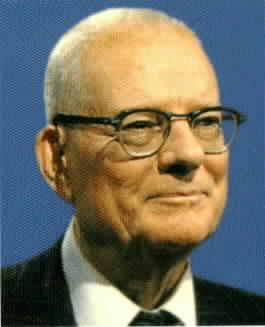
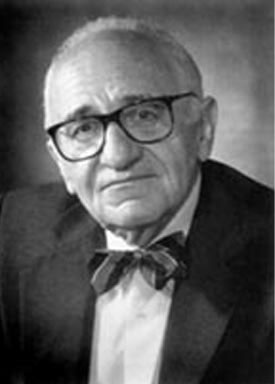
W. Edwards Deming is one of the great management theorists of all time, and Murray N. Rothbard is one of the great economists and political theorists of all time. They share a few key traits in common.

Deming had a deep respect for theory. His writings and teachings were focused on changing how we think about issues, primarily, to challenge us to understand and embrace uncertainty. When introduced to his ideas, students (many were executives in large companies) would often transpose the ideas to fit their own frame of thinking, usually based in certainty. Looking for a shortcut, they would often ask Dr. Deming how to implement what he was teaching them. Deming, famous for his brevity, would respond with “farm tools.”

He didn’t like the term “implement” because it suggested that the questioner was looking for specific instructions, a prescription to plug in and magically make everything work better without being labored with changing the way they think. Deming knew that the student had to learn and acquire an understanding of the theory and ideas, so that he can first observe the issue correctly and proceed to improve his system with the benefit of a better approach. Simply attempting to “implement” Deming’s methodologies without first understanding the theory behind them would lead to disaster at worst, bastardization of good ideas at best. Deming was uncompromising on the value of theory.

Sitting in mega-corporate boardrooms with high level executives, Deming faced a major challenge. The hardest people to teach new ideas are those who have been successful with their own methods, their own paradigm. Deming represented an entirely different paradigm, and most were reluctant to challenge their own thinking.

Prior to accepting a consulting contract, Deming would insist that the top executive and his top people were in the meetings. Often, he would start a session by asking “how many of you have dead wood on your staffs?” Many hands were raised. Deming would then slam his hand on the table and thunder out “did you hire them that way, or did you kill them?” He was charging them with the responsibility to confront their long-held beliefs about management – that it was their own management system that destroyed innovation and turned good people into drones.

Murray Rothbard is one of history’s colossal champions of freedom. His great teacher, Ludwig Von Mises, said that ideas always win in the long run. Rothbard was committed to ideas, and was uncompromising on them. When he was funded by the billionaire Charles Koch to found the Cato Institute, Rothbard took the opportunity as a means to advance the causes of liberty and freedom. Soon after, Koch and some of his other appointees began to pressure Rothbard to compromise his ideas for the sake of political expediency. Rothbard refers to this as utilitarianism; starting with a bold idea and watering it down to be more palatable to the existing paradigm.

Koch, eager to be politically connected in Washington, recognized that to gain acceptance among beltway power brokers, he would need to appeal to their paradigm, and did not want to be too bold with ideas that would offend their sensibilities.

Rothbard, of course, would have none of that. He refused to water down his ideas for the elites of Washington because it would diminish everything he stood for. They parted ways, with Koch and his statist Cato Institute going on to become politically powerful in Washington while paying only lip service to the ideas of liberty and freedom. Rothbard moved on to a leadership position in the Ludwig von Mises Institute, which to this day is committed to ideas and shuns any connection with establishment politics.

Ideas change the world. Existing paradigms must fall out of popularity or usefulness before they are replaced with the next paradigm, and their adherents do not give up without a fight. The champions of ideas must be bold, uncompromising, and dedicated as teachers to lead the paradigm shift. W. Edwards Deming and Murray N. Rothbard were two great teachers that serve as an example for us all.

Rothbard on Video

No comments

As a follow-up to my post on Deming and Rothbard, I would like to share this great video of Murray Rothbard addressing the Texas Libertarians in 1989. This presentation highlights Rothbard’s dedication to ideas and his optimism that ideas always win in the long run. I challenge you to watch it and not be drawn to his personality and wit.

Fiat Money

3 comments

Previous Entry: What is Money?

One of the key characteristics of a viable money is scarcity, and when it comes to their ability to acquire money, governments are universal in their opposition to scarcity. More money for government equals more growth in the size and scope of government. It allows government to pacify the masses with handouts in an effort to purchase loyalty to, and legitimacy for, government.

For the purposes of our example, let’s go back in time to an economy in which gold was the standard for money. Gold emerged as the medium of exchange, as a result of activities in the free market. It may have been exchanged in the form of nuggets, dust, bars, coins, or even warehouse certificates representing a claim on gold. Gold, as a medium of exchange on the free market, preceded government control over money.

Enter government, and its ongoing desire to increase revenues. The first thing to remember is that government produces nothing – all of its revenues must be acquired from the productive activity of its subjects via taxation. A dollar extracted from the taxpayer is a dollar the taxpayer is deprived of using for his own ends. There is a limit then, to the amount a government can tax – at some point, the people will revolt if taxation becomes excessive. Government will have lost its legitimacy in the eyes of the people.

Constrained by the limitations on its power to tax, governments then launched wars, acquiring money by sacking the wealth of the conquered. The people, receiving more government handouts from the spoils, were pacified. Again, though, there is a limitation to the amount of money that can be acquired by conquest. War is expensive, and the further the distance, the more difficult it is to wage and win wars.

Governments employed alchemists to create gold from lead, but were never successful in their scheme. Instead, they sought to seize control of the gold in the marketplace, monopolizing the coining process by minting gold into official coins issued with the kings portrait. These coins were declared “legal tender” and were the only form of money allowed for commerce. Trading in gold dust or nuggets, then, became illegal. Only the government’s officially certified gold coins were legal for trade.

You may wonder, how does government’s seizing of coinage and legal tender laws allow it to increase its revenues? First, by coin clipping. What was a one ounce coin can now be clipped, or reduced in weight. The government can then skim the value off the money by using the clippings, or the weight of gold saved in production of the coin, to finance its growth. The subjects, forced to obey legal tender laws, must trade with this coin that has had some of its value stolen. Here again, though, we find a limitation to the government’s ability to clip coins – at some point, the value will be so reduced that people will refuse to trade with the money and another form of money will emerge in the black market. Next idea? Debase the coin with other metals – mix lead or zinc in with the gold in the coining process. Now, you still have a full-size and weight coin, and you may fool the people – if not, you still have the legal tender law forcing them to recognize its value. Again we find that, at some point the gold content of the coin drops to the point that people will find it worthless and refuse to trade with it.

It is a good time to pause and think about the effects of these government actions on the marketplace. Each attempt by government to enhance its revenues via the manipulation of the money itself increases the supply of money in the marketplace because what government skims, it spends. Since money is simply a good exchanged for other goods, its increasing supply will lower its purchasing power. This is known as inflation. Socialist economics, as represented in the US media, likes to portray inflation as a rise in prices. It is not. In fact, the rise in prices is a result of inflation. This is an important distinction.

We have explored a number of ways in which governments can increase their revenues without increasing direct taxation, but each time we have found limits. And of course governments did, in practice, push these limits throughout history.

Enter the printing press.

When the printing press was invented, governments seized the opportunity to print paper and call it money, and through legal tender laws, force the people to accept the paper as a medium of exchange. It would not be an easy sell, however, so they “backed” their currency with gold. That is to say, a paper dollar could be exchanged, on demand, for a dollars worth of gold. Over time, the people accepted the paper dollars as legitimate, with the full backing of gold promised by government. This was the first and most important step in the evolution of a true fiat currency – a currency with no value outside of government decree.

Over time, governments continually printed more money than they had in gold reserves. But the people were gradually accustomed to accepting the money at face value and became lulled into complacency. A number of steps later, with the connection to gold continually redefined, manipulated, and eventually severed completely, government had found its alchemy.

Now, money is simply what government says it is. It can print it at will, producing a seemingly unending supply for its own consumption, financing its growth without inciting rebellion from the masses who escape direct taxation. Better yet, the theory of money has become increasingly complex, beyond the understanding of the average Joe – to the benefit of government.

The US government, through inflation, has destroyed the value of the dollar – one dollar in 2008 is equivalent to four cents in 1913, the year the Federal Reserve System was unconstitutionally formed. If you had decided to save $1,000 in the 1980s by setting it aside in a drawer, or stuffing it under your mattress, it would have lost 20% of its value today. This value is being stolen from you by government. It is a hidden tax.

With the power to inflate at will, government can pursue its interest in empire and warfare. Politically connected bankers and the Military Industrial Complex benefit from the inflation in the short term – they receive the money at present value, and are able to spend it before its value is watered down in the marketplace. Those in the middle class, on fixed incomes, and the poor pay for the loss in value when the value of money is decreased.

A zero sum game if ever there was one.

The more I study history and forms of government, the more I find myself asking: When will people learn? That is, after thousands of years of history, and hundreds and hundreds of examples of governments designed, instituted, gone awry, then collapsed – at some point, I would think that the people must realize the futility of this whole “government” strategy.

It’s a vicious cycle that goes something like this: People co-occupy a region, and the productive begin to trade with one another. The vast majority of the people will interact peacefully, while a few deviants prey on the productive, seeking to seize wealth from others instead of laboring to produce. To protect themselves from the bad element, and to delegate the use of force so that peaceful people need not take matters into their own hands, they establish governments and give them monopoly control over the legal use of violence.

The interesting dynamic is this: Now, that segment of the population that would rather seize wealth than create have an avenue for their aspirations – a position in government. They can now use the power of the state to steal from others.

Eric Hoffer said that those unfit for freedom seek power for the sake of power. He characterized them as the “have not” type of self. Free people, on the other hand, have a low need for power over others. “Leave me alone, and I shall create my place in the world and take care of myself and my family”, they say.

In establishing governments, the peaceful create an institution tailor made for those unfit for freedom, and the latter aspire to its ranks. Men write constitutions in the vain attempt to restrain government, but the government itself is responsible for overseeing the extent of its own power. The fleecers cooperate, uniting against the people, ignoring the restraints placed upon them; setting about a long, steady path of bleeding the productive sector in a continual transfer of power from individuals to the government.

In time, the government destroys the productive sector, the people give up all of their liberty for safety from government-created bogeymen, and the “planners” take over. Violence ensues, and hundreds of thousands, perhaps millions, lose their lives. Eventually, the system collapses upon itself; government loses its legitimacy in the eyes of the people, and they are forced to deconstruct it and start all over again. This time, they say, we’ll build a better government – and the cycle begins again. It just never ends well.

I’m encouraged by the networking effect of the Internet and its ability to record history and disseminate information. There is great competition for ideas in the free exchange of the web. Greater interconnectivity changes the rate of change in systems. I imagine that the networking effect will serve to accelerate the government cycle – perhaps we’re witnessing the last government to exist for centuries.

On another note – As a thought experiment, assume that space travel becomes possible, even routine. One of the key pieces of the formation of a state is region – a land mass shared by a community of people. As space becomes infinite and mobility increases exponentially, are governments less likely to be formed?

The New York Times recently wrote about these “expert military analysts” so often called on by the government’s propaganda outlets to explain how well the occupation is going.

As it turns out, these retired military generals represent 150 companies in the Military Industrial Complex as lobbyists, senior executives, board members, or consultants. They are briefed by the Pentagon on their talking points so that the message the corrupt government wants delivered to the masses will be favorable.

Get this: “A few expressed regret for participating in what they regarded as an effort to dupe the American public with propaganda dressed as independent military analysis.”

And this gem: “Internal Pentagon documents repeatedly refer to the military analysts as “message force multipliers” or “surrogates” who could be counted on to deliver administration “themes and messages” to millions of Americans “in the form of their own opinions.”

Nothing to see here people. Let’s turn on the TV and find out what’s going on with Britney Spears.

What is Money?

No comments

Many people think of money as a creation of government, a system of managed value and legal tender for debts. An attempt to understand money by reading financial news will only serve to reinforce this view, portraying the idea of money as a lot of high-level decisions made by great planners, with a host of loathesome statistics to keep it out of the reach of the average person.

It is not difficult to understand money. In fact, it’s quite simple. Money is a good, just like cars, bread, and horses. Money is a creation of the free market, arising from the actions of individuals engaging in trade. Absent money, all trade is reduced to barter. If I am a shoe maker, certainly I do not wish to keep all of the shoes to myself; I have an interest in trading them for other things I need, like butter. If you are a farmer who produces butter, we may have an interest in trading with one another and we may arrive at a suitable trade agreement, say, one pair of shoes for five pounds of butter. But what if you have no need for a pair of shoes when I find myself in need of butter? Perhaps you are interested in trading your butter for a lantern. I may now seek out a lantern maker to see if he’s interested in a pair of shoes, and if I can complete a trade, I now possess a lantern that I may use to acquire butter.

It is clear that a barter system makes trade difficult compared to our modern experience with money. If you want a lantern, a pound of butter, or a pair of shoes you can easily find a seller and purchase the item with dollars. But how did the concept of money come about?

It is feasible to imagine that in one community, butter itself was recognized as money. People would hold butter not only for consumption, but as a medium of exchange that they know will be accepted by most other traders in their community. This allows them to sell their goods on the market in exchange for butter, and to then use that butter to buy whatever they needed for themselves. Butter still holds its value for cooking and other household uses, but it would also have a new value as a facilitator of trade.

If this example seems a bit of a stretch, it can be explained by noting that we’re not all on the “butter standard” today – over the centuries the market found the best solution, with gold emerging as the preferred medium of exchange, hence the term “gold standard.”

There are several key factors that make a commodity desirable as money:

Divisibility - It should be easy to trade in varying quantities. Both butter and gold meet this requirement. On a smaller scale, I may trade an ounce of gold or a pat of butter. On a larger scale, I may trade a gold nugget, or a wheelbarrow load of butter. But as the scale grows larger, we see value in…

Portability - It should have a relatively high value in proportion to its mass. Here, butter fails the test. Imagine trying to buy a car with butter; how much would it take, and how are you going to transport it to the car dealer? At today’s rate, you could buy a decent car with 20 ounces of gold.

Scarcity - If butter were money, anyone who became a dairy farmer could produce their own supply of wealth. Gold, on the other hand, is relatively scarce. Few of us have the means or desire to take up gold mining to amass our fortunes.

Durability – Butter doesn’t keep forever, so it would not be in your best interest to put 100 lbs of it under your bed as retirement savings. And if it’s too warm outside when you go to make a trade, it’ll melt in your pocket. Gold is very durable and highly resistant to corrosion.

Uniformity – It must be clear that one unit of money is similar to another. In the case of butter, it may vary in quality and ingredients to a large degree. Gold, especially when minted into coin or bullion stamped and assured of purity, meets this test.

Lastly, a commodity used as money must have some inherent value of its own, even if it were not money. Butter, of course, has value as food. Gold, on the other hand, is prized for its ornamental value in jewelry, as well as a conductor in electronics.

Butter did, in fact, serve as a medium of exchange in the barter system of Norway during World War II. However, reviewing the criteria for good money, we see that it falls short in the areas of portability, durability, scarcity, and uniformity. Try a few examples for yourself – pick any commodity, perhaps one that you remember has served as money in history, such as wampum shells. As you go through the list, you’ll find a test that it doesn’t satisfy as well as gold.

So why has the concept of money become so complicated and difficult to understand? Because throughout history, governments have sought to seize control of money from the marketplace, manipulating its value and monopolizing its production to finance government’s growth and war making power.

Next entry:Fiat Money

This is one of the most annoying things I hear – “you’re not voting for <insert establishment candidate here>? Aren’t you aware that you’re wasting your vote?

The title of the post is my standard response. A vote of your conscience is never wasted.

Just the other day, I was talking to someone who is voting for John McCain, and I asked him what he thought of his candidate. His response was “lesser of two evils.”

News flash: When you vote for the lesser of two evils, you still wind up with evil.

I poked around on the web one day trying to further understand this phenomena. Why do people vote for a candidate they don’t believe in? I came across an interesting perspective at a blog called The Spin Factor, that what people are engaging in is a game of “predict the winner” – a form of gambling, actually. Then there’s the explanation that people want to be on the winning team to fulfill their ego needs.

I don’t know the answer, all I know is that its wrong. When the establishment props up before you two candidates who will continue to destroy what’s left of the constitution, I say “none of the above.”

I’ll be writing in Ron Paul. And I’ll sleep well with my decision.