The Ultimate Minority

Whenever you find that you are on the side of the majority, it is time to reform – Mark Twain

Your right to travel unencumbered is one of your natural rights – inalienable, independent of where you live or where you were born.

It seems that the right to travel unencumbered is always one of the first rights to be violated by governments. It starts subtly enough – how long after the invention of the automobile did governments step in and say you can’t operate the vehicle without paying them to license it, and that you must pay further fees to license yourself? I remember being taught in high school that driving is a privilege, not a right. How did we come to accept the premise that our means to travel from home to work is a privilege granted by government? Government grants no rights, no privileges. Its only function is to recognize and protect rights.

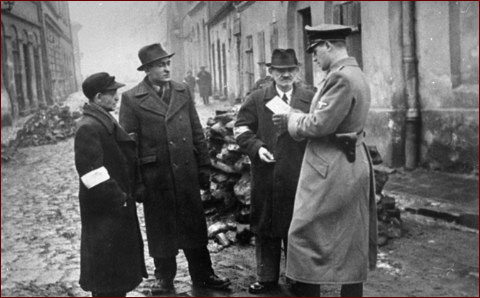
One could map the violation of the right to travel on a continuum from a free republic to a police state. It first shows up as permits and licenses, moves into heavy inspection and personal screening to remind us that the state can harass us at any time, and finally manifests itself as a requirement that we show our papers lest we be jailed.

The Real ID act went into effect earlier this month, unnoticed or unknown to many. It requires that we all carry a national ID card, and that we’re all in the government database. Further, it is planned that the Real ID will hold an RFID chip, so that our movement can be tracked at any point. No one seems to care. Many a reader will bristle at this post, upset that I have the audacity to challenge such important government action designed to protect us from terrorists, keep out illegal aliens, etc. The reality is that a national ID card will do nothing to make us safer, it will only make us less free. Giving up liberty for safety is always a no-win proposition.

Check out the video of motorist Abby Newman. She was pulled over for no reason, so that the police could check her license and registration, a clear instance of unlawful search and seizure. Abby has the temerity to question the agent of the state, and winds up handcuffed and off to jail.

We accept these searches under the guise of protecting us: Protecting us from drunk drivers, protecting us from ourselves neglecting seat belt use, etc. The state spends our tax dollars to threaten us with television and radio commercials, reminding us that we are under its monitoring and control. This is only a conditioning step, it will get much worse.

In time, you will show your identification to move from point A to point B with greater frequency. You will submit to deeper and more intrusive searches by the state, and you’ll be tracked wherever you go. And when it comes time to round you up for your ethnicity or beliefs, you’ll be easier to find and convict of wrongdoing.

Your neighbors will figure you must be guilty of something if the government is taking you in, resting comfortably at first – later with less ease – that they’re not coming for them.

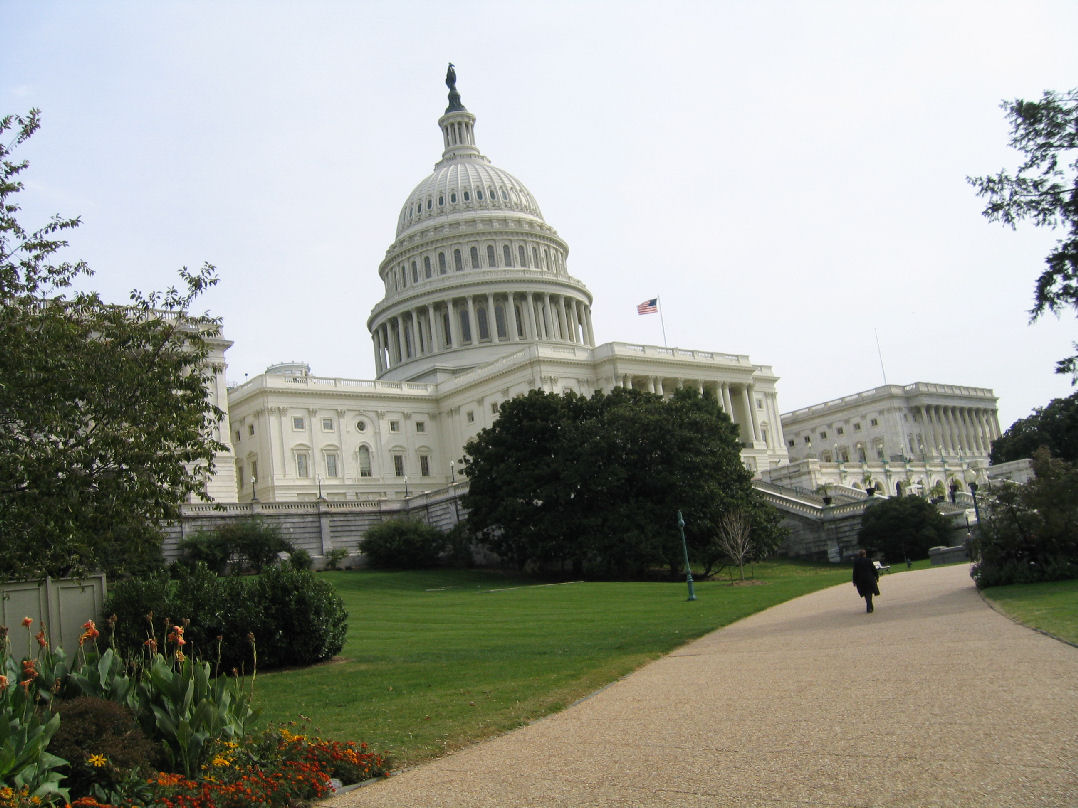
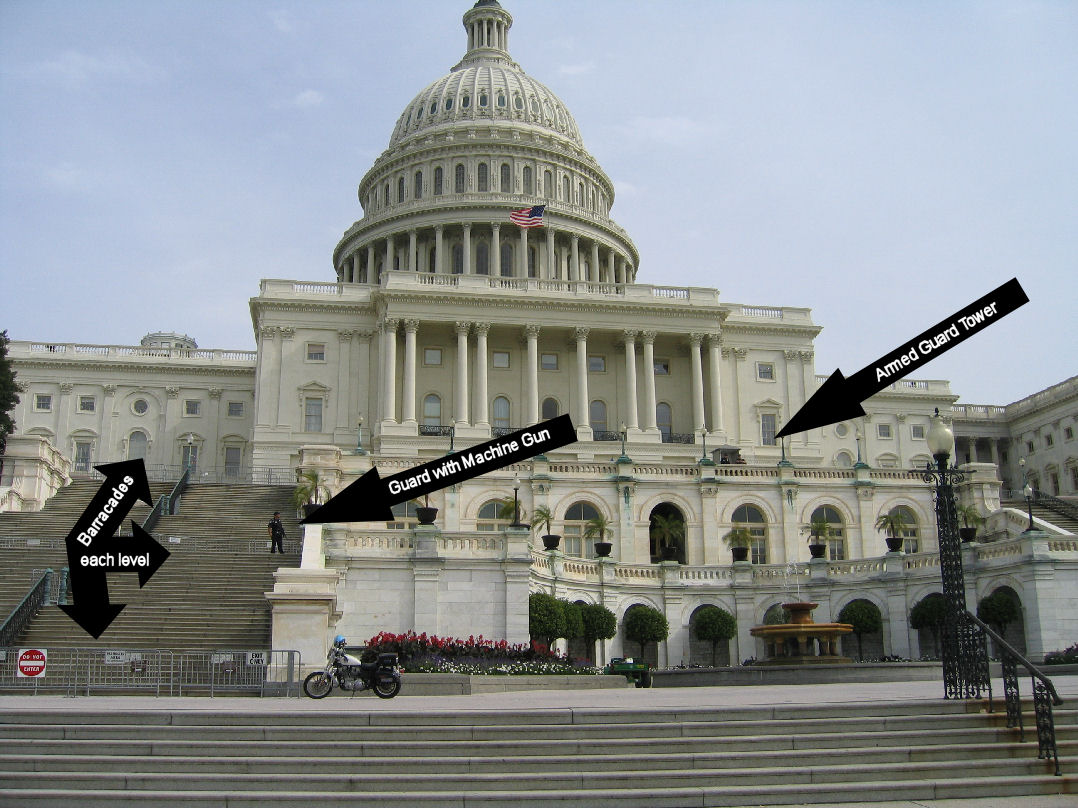
These pictures are from our October 2006 visit to Washington DC. This is the Washington that you don’t see on TV. (You can click on these pictures to see a full-size version.)

As you approach the Capitol building, everything looks normal enough:

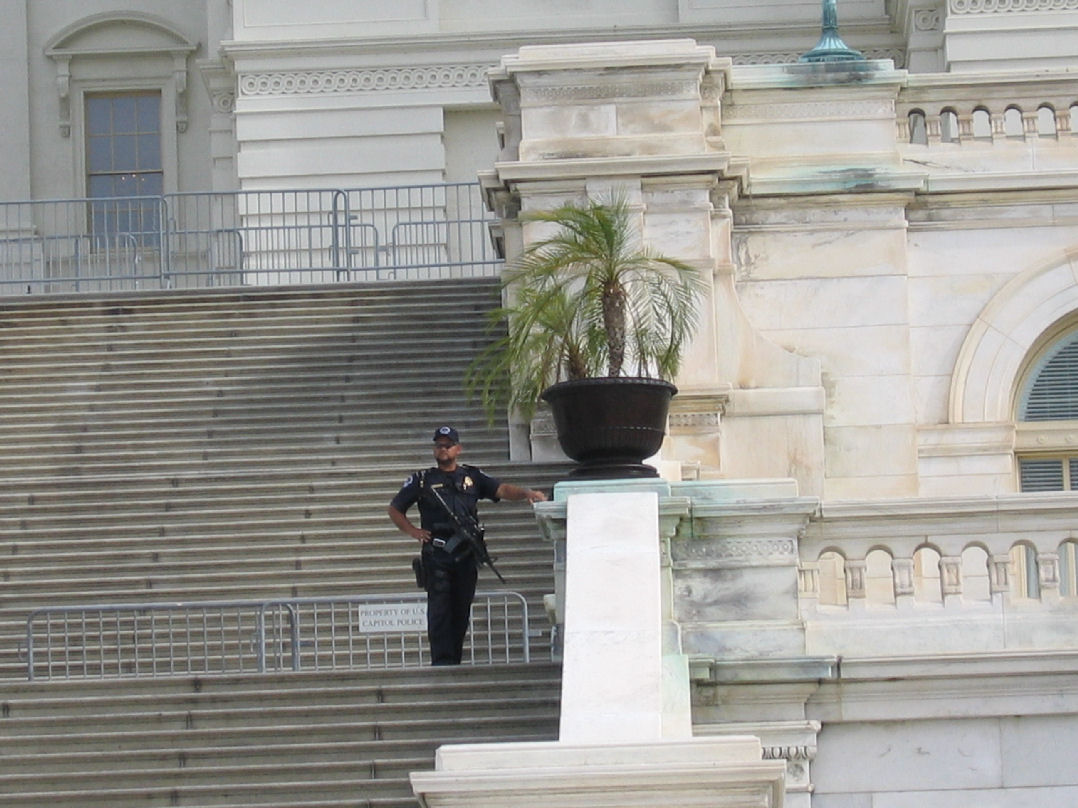
Now look at the second picture. There are barricades on each level of steps, an armed guard tower at the top, and machine-gun toting guards standing on the steps. You can only see one in this pic, but there’s another one on the other side.

In the third picture, we see a zoom on the guard with the automatic rifle:

Does it look like you’re welcome in the building that houses your representatives? Would you dare take a walk up these steps?

Doesn’t this look like something you might see in the former Soviet Union? A full five years after the terrorist attacks, and the place is in lockdown. It’s not just the capitol building, all of DC is one giant security zone. This is what a “war on terrorism” looks like on the home front. Stay back, you’re a threat.

.

…In a true free market economy with sound money.

I’m writing this entry to challenge a paradigm, to show that so many things we accept as the “way things are” just aren’t so.

The “reality” we have come to know is based on constantly rising prices and the need for constantly rising wages to keep up with the cost of living. These are not realities of the free market – they are a product of fiat money and inflation, creations of government.

When governments can print money at will, creating it out of thin air, their natural incentive is to produce as much as possible to fund the growth of government. When the money supply increases, its value decreases and it is able to command fewer goods in the market place. This leaves us all in the position of constantly trying to earn more money to keep up with the loss in its value – value that is being stolen from us to pay for more and bigger government.

Humans are very adaptive, and we adjust our lifestyles from generation to generation to meet changing circumstances, often without thinking about how or why the circumstances have changed. What once was a single income earning society has become a dual income earning society, with both parents working full time to provide a standard of living that was once provided by a single breadwinner. A college education used to set one apart from the crowd, now it’s simply a prerequisite to get a job. The gap between the haves and have-nots is widening, the middle class is being wiped out.

Few people save, because saving is a constant race to find investments that post gains at a rate exceeding the rate of losses in the value in our money. Much of this is beyond the capacity of the average wage earner. There was a time when a bank savings account, and the interest it compounded, was a good idea. Today, money sitting in a bank savings account is losing value to inflation. If the loss in the value of money isn’t readily apparent to you, try this inflation calculator. Perhaps you can remember the price of something you purchased 10 or 20 years ago – look it up and see what it would cost in today’s dollar.

In contrast, consider a true free market economy based on the gold standard. In such an economy, there would be a limited supply of money available. New gold added to the money supply via mining would be relatively insignificant in the frame of an entire economy.

Since money (gold) is nothing more than a good exchanged for other goods, the limited supply will increase its value as the free market creates more and more goods available for exchange, all competing for a share of the existing pool of money. Established goods become more competitive as producers employ advanced technologies, making it cheaper to produce the good and thus, profitable to exchange for less gold.

Lower prices for consumer goods equals a higher standard of living for consumers. As technologies advance and efficiencies are improved, wage earners are able to command more luxury items with their disposable income. They will need less money for the basics, as the cost of food, housing, and transportation fall. Absent a government-imposed minimum wage, suppliers of simple products such as fast food may provide more value, while the employees of such enterprises require less compensation to enjoy a share of the “good life” provided by the ever expanding, cost-of-living-reducing free market.

Savings increase in value, even without gaining interest! If the purchasing power of money increases over time, then a quantity of gold saved today will only increase in value for the future. Yes, it is possible that storing money in a buried jar is a good idea. Parents who save their wealth, earned in times of lower value, may pass it on to their children, increasing family wealth from generation to generation.

The hallmark of free markets, capitalism, and the American system (as established) is the rise of the middle class. Unlike never before, more and more people were able to enjoy luxuries previously available only to the elites. Let us not confuse a higher standard of living with a higher wage. In fact, in a free market economy with sound money, each generation may enjoy a higher standard of living with lower wages than the previous.

Update:  This post has been the most viewed item at Ultimate Minority.  If the ideas have intrigued you, I recommend reading my posts titled What is Money and Fiat Money for more background information.

When you look at all the media coverage, all the hype, and all the hundreds of millions spent in the presidential election campaign, it reveals something fundamentally wrong with the state of American politics.

We are electing a king.

The executive is only one branch of three in the United States Government, yet ask people on the street who they support for president. Most of them will at least have an opinion, and will know who they prefer by name. Ask that same person who he’s supporting for his representative – chances are he won’t be able to name a single one, and probably won’t know anything about any of them until he’s standing in the booth in November, perusing the names, looking for an R or a D next to the surname. Perhaps one of them will sound familiar…Pull the lever.

This a built in structural property of bureaucracy: It is designed as a hierarchical pyramid, with one at the top and many at the bottom. A society culturally conditioned into central control and bureaucracy in all of their institutions looks to the top of the pyramid for their leadership.

In government, this places the President at the top, with the Congress subordinated below. The States are subordinated below the Federal Government, all smaller departments of the massive pyramid structure. At the bottom of the pyramid lies the individual, nothing more than a subject to government. This is not the intended design of our republic.

We don’t blink an eye when we hear the media discuss our choices for the next Commander in Chief, when of course the President is Commander in Chief of the military only, and only when Congress has authorized the use of the military. The President is not Commander in Chief of the people.

Thomas Jefferson said it is the natural progression of things for government to grow in power and for the people to yield liberty. A belief in bureaucracy, central planning, and executive leadership is an enabler, establishing a structure that the people believe in, one that allows government to seize and centralize power.

There’s a story in the LA Times interviewing an anti-American Iraqi that sums up why military occupation is always doomed to fail. Here is a sample:

Abu Baqr says he had actually welcomed the Americans five years ago when they toppled Hussein. He handed out flowers to U.S. soldiers early in 2003 and played soccer with them in the street. But he said their behavior convinced him early on that they were not leaving and were intent on antagonizing Sadr. By April 2004, Abu Baqr had joined in the first of the revolts against the Americans.

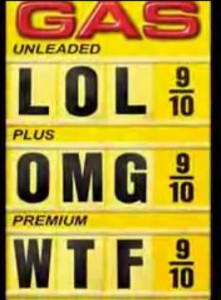
$10 Gas? Why?

No comments

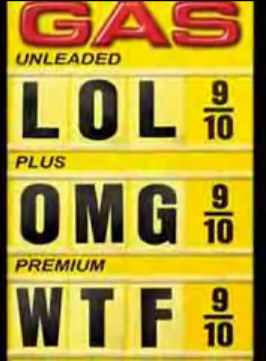
News reports have some analysts now predicting that gasoline will hit $10 a gallon over the next few years. Will it reach $10? No one knows – but the idea alone has the American people asking questions: How will I afford to drive? Will we be able to take that vacation? Should I buy a smaller car, maybe a motorcycle? What will happen to the economy? What will the government do about this? What is the cause of all of this?

They’ll turn on the evening news and read the newspaper – and they’ll be presented with myriad explanations for what is going wrong – but most of it will be misplaced cause and effect analysis at best, blatant deception at worst. I’d like to keep it simple, to provide a lens through which to see and filter what we hear. This will be a two-part post, the first will stay at a higher level, based on two straightforward premises:

  1. This is not a failure of the free market.

  2. Governments are culpable.

The only reason prices rise in a true free market with sound money is when demand exceeds supply, and we will hear a number of analysts giving supply and demand reasons for the price increases:

China’s growing appetite for energy, decline in worldwide oil reserves, lack of refineries in the US, OPEC production restrictions, our insistence on driving big SUVs, labor actions overseas threatening crude supplies, slowing of production by refiners due to low margins – have I started to confuse you yet?

It is axiomatic that these and many other aspects of supply and demand have an effect on prices, but if you view them with the perspective of my second premise, that governments are culpable in this mess, you will see that supply and demand are manipulated by governments. Absent government, the only variables that exist are consumer demand and the ability of the market to deliver what consumers want – and as long as there is demand, free market enterprise is eager to fill it. The only thing that can keep the entrepreneurial spirit from meeting demand would be a true shortage of oil, or the ability to access it and deliver it to the market place.

If there is a true market shortage in supply, consumer demand will change as prices rise. They’ll reduce their consumption, alternatives will arise through innovation on the free market, and supply and demand will move closer to one another again. Price is the signal that provides everyone in the market with the information they need to make decisions.

Let us turn our attention to the second premise: Governments are a major part of the problem. We’ll begin our analysis with a few sub-premises:

  1. Governments are anti- free market because they are based on central planning and control
  2. Governments seek to seize wealth and control resources to their benefit

In a true free market, supply would be limited only by reserves and the ability of enterprise to access them. When government is involved, supply is manipulated and controlled in the interests of bureaucrats, dictators, and central planners. There isn’t anything close to a free market in the major oil producing countries, because the governments have seized control of the oil to the detriment of the people. The reader may quickly point the finger at other governments, but the fact is that many of these regimes were formed by, and are manipulated by, external governments. It was only in the early part of the 20th century that oil in the Middle East was known to be in vast supply, and that oil itself was recognized as holding great strategic value. From that moment forward, empire-seeking governments such as Germany, Great Britain, and the United States have fought wars, divided the region into countries to their benefit, and installed regimes that will bow to their interests. In oil-rich countries where the government resists the empire, they have nonetheless seized the wealth of the oil to the detriment of the people. They are socialist countries, with government controlling their only real source of wealth and distributing just enough pottage to the people to keep them pacified.

War is devastating to supply. Governments launch wars over oil to control its supply, in the sinister belief that they will be assured of a cheap flow of oil if they can wield enough military force over the oil producing countries. One of the primary objectives of the US Government’s invasion and occupation of Iraq was to gain control over the vast resources of that region, to diminish the strength of the Saudi Government and its attempts to wield power by manipulating supply. Iraqi oil production, once at 3.5 million barrels per day, plummeted due to war, sanctions, and more war, and has been less than half its previous average for most of the time since. Reduced supply has increased prices. Another factor is the cost of insuring shipments in a war zone, costs that will be passed on to the consumer. All told, remember when we were told that Iraq would pay for this war with oil, and we’d all see an improved supply of oil and cheap prices at the pump? It doesn’t appear to have worked out. Oil has rocketed from less than $30 per barrel to $120 at the time of this writing. The forecasters, predicting $10 per gallon gasoline, are talking about $200 a barrel.

The reader may ask, absent US Government intervention, won’t we be at the mercy of oil producing countries? The first response is that the producers have an incentive to sell their oil. It is their source of wealth. The second response is that it is their oil, their property. If your neighbor has something you want, you don’t have the right to steal it from him, nor beat him up to make him sell it to you – and you can’t use your government to do it for you either. It is not “our oil.” Again, they have an incentive to sell it, and the US market is their biggest customer. Even Osama Bin Laden understands this when he says that it’s not like they’re going to drink it – they want to sell their product.

At home, the US Government takes on its role as central planner and attempts to manipulate demand, directing resources to the production of alternative energy sources. Taxpayer funds are diverted to favored special interests and immense profits are made on non-viable solutions. Profits, in a free market, are the result of efficient production of goods and services that can be sold at a price higher than the costs of production, because the consumer places value on the good or service that exceeds the cost to produce it. In government subsidized production of non-viable solutions, profits are privatized while the losses are socialized – that is, a chosen few benefit from government contracts and subsidies, receiving money that could not have been earned on the free market, while consumers are forced to make up the difference with their tax dollars. A belief in government and central planning is the culprit – innovation does not occur by specially appointed “experts” (and government officials are experts at nothing) picking the winners and losers, innovation is the result of hundreds or thousands of individuals exercising intellectual curiosity – you cannot know where it will come from. When oil prices signal opportunity, the market will respond. Government planning has resulted in wasteful, inefficient boondoggles like ethanol, subsidized with tax dollars to the point that corn is sold cheaper than it can be produced. This government intervention is a form of tampering with the free market, redirecting resources and causing ill side effects.

We’ve shown how intervention disrupts supply and increases cost, and how attempts to manipulate demand by forcing economically infeasible solutions costs the taxpayer, but there is a much more subtle, more hidden means by which the US government, predominately, is at fault for our pain at the pump.

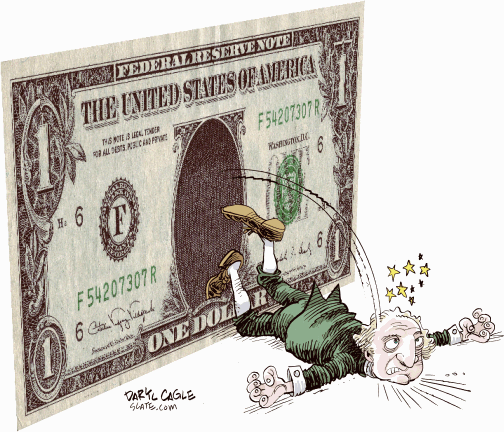
The biggest hammers in the government’s interventionist tool box – war and subsidies – must be financed with inflation, destroying the value of the dollar and decreasing its purchasing power. A devalued dollar, of course, will purchase less gasoline with each dollar. Many economists have pointed to the falling dollar and the rising cost of oil. This is a good start, although, if we compare the prewar price of oil to the postwar price, we see more than a 400% increase. The dollar, while sliding precipitously, has not lost that much value over the same time frame. What has happened? This will be the topic of my next entry.

Next entry:  Inflation and Gas Prices

Wind Wanglers

No comments

Visiting family in rural Indiana this weekend, I was taken for a drive to see the new wind farm a few miles away. Eighty-seven towering wind turbines standing in the middle of corn fields, all facing the same direction as if they were standing at attention. I looked at the size of these structures and knew they represented substantial investment. My mind started looking for figures to calculate: How much does it cost to build one of these things? How much electricity do they generate? What is the payback period (as in, if it costs a dollar to build one, how long will it take for it to generate a dollar’s worth of electricity to pay for itself?) What is the relative power production of wind turbines compared to traditional power plants? Forgive my cynicism, but all of these questions led to one bigger, more important question: Who’s making big money on this, and who’s getting the shaft?

Once you understand a principle, it is relatively easy to find its application in any number of examples. The principle here is that government planners pick and choose winners in alternative energy sources, awarding them handsomely with subsidies that make economically inviable projects profitable for the few, costly to the many. Profits will be privatized, losses will be socialized.

I started doing some basic research, and quickly found my cynicism to be justified.

There is a substantial lobby in Washington representing the interests of wind farm builders. This fact alone hints that someone is probably making a lot of money at your expense, and if you’re thinking so, you’d be right. Where traditional power generating facilities may write down (depreciate) the value of their capital investment over 20 years, wind facilities enjoy a 5-year double declining balance accelerated depreciation. They then receive a production tax credit of $0.019 for each Kilowatt hour of electricity produced. A wind farm generating 300 MW of electricity a year would earn a tax credit, a dollar-for-dollar reduction of the amount owed in federal taxes of approximately $15 million. For this reason, smaller companies building wind farms typically sell them to very large corporations, who can utilize a tax credit of this size. The acquiring company also gets the five-year accelerated depreciation on their purchase.

All told, the federal subsidies pay for about two thirds of the project, and the state tax credits and incentives typically pick up about another 10%. So what do we get in return? Not much.

For the state of Indiana alone, it would take tens of thousands of wind turbines to generate just 5-10 percent of the total energy used by Indiana consumers in a year. These things don’t produce a lot of energy, typically operating at just 15 to 25% efficiency. Wind turbines only generate their rated capacity in wind speeds of 30-55 mph. Below those numbers, power generation drops off rapidly; if the wind speed falls by half, power drops by a factor of eight. Above 55 mph, the turbines will actually “hit the brakes” and shut themselves off to prevent structural damage.

This is an example of how the global warming hoax is used to line the pockets of politically favored groups. In the name of reducing carbon emissions to save us all from our impending doom, costly, inefficient means are being subsidized with taxpayer dollars, creating a few winners and, as usual, a lot of losers.

There is a fungus in the forest floor of eastern Oregon spanning 2,200 acres; it is known as the world’s largest living organism in terms of area. But there is a growing body of research showing that Armillaria ostoyae has a contender: Governmentus Americanus. This parasitic organism is growing exponentially, and it seems nothing can stop it – not an eroding productive sector, a shrinking tax base, declining revenues, trillion-dollar wars, recession, inefficiency, nor higher operating costs – it appears to shun all dynamics that scientists believe should halt, if not at least stunt, its growth.

A USA Today report provides a cursory glance at the leviathan: While our productive sector continues to shrink, government keeps growing. In the current recession, businesses have cut back 286,000 jobs in Q1 2008, while federal, state, and local governments have added 76,800 jobs.

If your household income is dropping, would you increase your spending? If you were running a business and your revenues were in decline, would you hire more employees? The answer is of course not on both counts. This simple logic escapes government officials.

When 286,000 productive people are out of work, revenues fall. If government spending even stays the same with declining revenues, it must be funded either by extracting more taxes from those still working, or running up more debt. But this situation is worse – they’re adding more cost, more programs, more people.

A Keynesian economist views this as an offsetting effect, softening the loss of jobs and helping to keep the economy out of recession:

“Government jobs are an important cushion for the economy when the private sector falters,” says North Carolina State University economist Michael Walden.

Michael Walden must answer the question: How will the government pay these new hires? It must extract more taxes from the productive, or run up more debt. And this is somehow good for the economy?

State and local governments have run deficits for the last nine months, the Commerce Department reports. Tax collections went flat in the middle of 2007, but spending has continued to rise.

Government jobs add nothing to the economy, they place a further burden, a drain on the economy. Governments create nothing, they leech from the productive private sector. And as long as people believe that government hiring is a good thing in the face of a declining jobs base, we are in a perilous spiral.

Enjoying a sandwich at a pub in Lansing a few months back, I engaged in a conversation with the man sitting next to me. We learned that we had something in common; I own a small manufacturing company, and he is a general manager for a much larger company in the Lansing area.

He told me that his company went from 300 employees to 1,200 in the past year. Wow! I was impressed. In today’s manufacturing climate, quadrupling your staff is a major accomplishment. I went on to ask him what they do, and what they did to experience such phenomenal growth. As it turns out, they do a lot of welding, and they were building armor for military vehicles. I’m not sure if my sigh was audible.

Some time back, I heard the governor speaking of opportunities in defense contracting and homeland security work – that Michigan needs to focus its vast engineering and manufacturing capability to win government contracts. Today, I received the Michigan Business Report in my mailbox. The cover story is DC3: The Forefront of Defense Contracting: Helping Michigan Business Get Ahead.

This is our growth industry. This is what we’ve become, a nation working for the government to build its war machine and security apparatus to further invade our privacy.

The most important thing to understand is this: Government contracts do not create wealth and prosperity, they destroy it. All of the money the government spends is wealth extracted from the productive private sector. The only source of funds government has is what it takes from us. Therefore, every penny of a $20 billion government contract must be paid for with taxes by those of us who don’t work for the government – those holding the contract are taking the money from the rest of us. Yes, they’re paying taxes, but they’re paying their taxes with money received from our taxes. Nothing is created by supplying government.

The money is wasted. When I was a consultant, I worked in the City of Memphis government for a few years. We had a pre-approved supplier list that mandated a source for our purchases. Once, I sent a software request up to purchasing and then asked to see the bids. All of the bids were at least 200% higher than I could have purchased the item off a store shelf. When I brought this up to the purchasing people, they looked at me like I had three heads. Who questions our cost? We have pre-approved suppliers, and we have to use them. This kind of waste is not the exception, it’s the norm – and this is only at the big-city government level. The bigger the government, the bigger the spending. We’ve all heard of the $4,000 ashtrays.

But this pales in comparison to the billions spent building our war machine, which is subsequently destroyed or destroys the infrastructure of others countries, which we then pay to rebuild. When the US Government blows up a bridge in Iraq using bombs purchased on a $50 million contract, that money has evaporated into thin air. When they rebuild the bridge at the cost of $50 million, that money is again extracted from the productive sector.

And yet, the states are tugging at the shirt tails of the federal government for their share of the booty, and governors stand proud to announce the defense contracts they’ve secured. It’s bad enough that the people are ignorant of economics and cheer the fraud, but government officials themselves do not understand that everything they do is waste. They believe they’re adding value to society. The Michigan governor has hired a retired military general and given him $10 million taxpayer dollars to lobby Washington for contracts. Here is a passage from the press release:

“General Lott’s military and acquisition career experience make him an ideal choice to lead this new initiative,” Granholm said. “The high concentration of R&D and talent in Michigan positions us well for securing a larger share of contracts to the multi-billion-dollar defense industry.”

Granholm noted that homeland security/defense is one of the high-tech, high-growth sectors specifically targeted by the 21st Century Jobs Fund initiative.

When I purchased my company three years ago, I established a set of principles to which we must adhere. One of them is simple: We do not accept government contracts.

I was listening to the Scott Horton Show today on Antiwar Radio, an interview with Bruce Gagnon from space4peace.org.

The guest had a lot to say about the government’s plans to dominate space and its application in warfare, including some interesting information on plans the government would love to realize giving it the capability to kill an individual from space on remote command, anywhere in the world, at any minute. Some of it seemed a bit far fetched, but when it comes to government’s never ending quest to find new and better ways to kill people, I’ve become reluctant to simply write off anything I hear.

Scott refers to himself as a libertarian and an anarchist, and he does a great daily radio show to denounce government and its wars. His guests include antiwar activists and writers from across the political spectrum. I always enjoy listening to their critique of government, but often there comes a turning point in the conversation. It usually starts with: “What we need to do is…”

Mr. Gagnon leveled multiple charges on the Military Industrial Complex and the big multinational corporations that are in control of our government. So far, so good – although, I sensed that he was associating the “big multinational corporations” with capitalism and free markets, but I’ll reserve judgment for the moment. Then the setup line:

“We’ve got to offer an alternative vision for all of this insanity and madness…”

Uh oh, here we go.

“And for me it’s clearly calling for the conversion of the Military Industrial Complex, using our tax dollars, instead of countinually building for this endless war to benefit multinational corporations, using it instead to fund the creation of a new industrial policy.

This is where I’m thinking, here comes the plan. See, socialists can’t understand that central planning doesn’t work. Not only do they not understand that it doesn’t work, they can’t see how anything can possibly be done without a big master plan developed and overseen by a central body of authority. And unsurprisingly, they each have the “right” idea of how everything should be, if everyone would just agree that their way is the right way. Now, we just need to reach consensus.

Mr. Gagnon goes on to suggest that we need a rail system to every corner of America to reduce our consumption of oil, and windmills dotting the landscape.

“The environmental groups have it half right, they’re saying that we need to build solar and rail and wind, but they haven’t come up with a funding source. If they think that the corporations are just going to just do this out of the kindness of their hearts, I’ve got news for you. And in fact, if they think the government is going to be able to pay for it, it doesn’t have the money right now, because of our huge debt.”

And so we see another key trait of socialism: A complete ignorance of economics. Corporations do things because they believe them to be economically feasible, and forecast that they will therefore yield a profit. Profits, of course, are evil to socialists. But if the money won’t come from the corporations, where will “we” get it? It’s ironic that he says the government can’t pay for it because they don’t have the money “right now.” Where does the government get its money? Government creates nothing, it only extracts wealth from the productive element of society – and that includes the corporations that provide jobs. But Mr. Gagnon has an easy solution:

“There is a funding source available, it is the Military Industrial Complex.”

What? Where does the Military Industrial Complex get its money? From government! That’s right, the same government he says doesn’t have any money “right now.” Notwithstanding his glossing over where the money comes from, our distinguished activist wants to convert the MIC into a giant public works program.

“If we took the $12 billion we spent in Iraq last month, and invested it in America, we’d have created a million jobs!”

“Imagine the jobs created building windmills!”

Government jobs for everyone! But where will the money come from? It will need to be expropriated from the productive sector. Yes, it would be great if our government weren’t spending $12 billion a month on war – that is money we don’t have, so it’d probably be a good idea if they didn’t spend it at all.

In wrapping up the interview, Mr. Gagnon says we’re all pitted against one another by the power structure, and that we need to all come together:

“To end this reality in American Politics where we’re fragmented and broken apart from one another, because it is in that fragmentation that the power structure stays in control”

This is the most importantly wrong aspect of socialist idealism. The power structure is the government. The Military Industrial Complex achieves its power from its politically favored position with government. The “big multinational corporations” he speaks of are not products of the free market, but are creations of the government, in the form of corporatism. It is government control and intervention that destroys freedom, destroys jobs, and destroys choice. But to the socialist, there can be no society that is the sum of interactions between individuals, it must be centrally orchestrated. And they believe government is the key. They complain about the outcomes; the wars, the crushing of civil liberties, the corrupt power structures – but they keep wanting to build their centrally planned utopia. Socialist thinking is the enabler. It is how our Republic has devolved into a democracy, and will continue to slide toward totalitarianism.

To be fair, I don’t know if Mr. Gagnon calls himself a socialist. While there are some who will read this who do call themselves socialists, there is a far greater number who don’t consider themselves socialists while following the doctrine. That is because our education system teaches socialism, and most of us are not even aware of it. If we are to have any hope of turning this around and restoring freedom and liberty, we must reeducate ourselves regarding free markets and economic liberty. Socialism is not the answer to our problems, it is the cause of our problems.

When an idea goes unquestioned – when an idea is held so deeply within us that we don’t even realize it because it just seems like common sense, we are not in control of the idea, the idea controls us.